
Professional Certificate of Competency in Building Information Modelling (BIM)
Building Information Modelling (BIM) is a concept that revolutionized the way construction projects are conceived by developing intelligent virtual models. When applying BIM, the resulting 3D model is a data-rich digital representation of the facility.
Duration
3 months
Intakes
May, October
Tuition Fee
Vary*
Location
Online
CRICOS
03567C
*Please get in touch for more details on fees
About the program
It provides professionals with the necessary information to perform practical building analysis. This course aims to discuss several possibilities for adopting the BIM methodology for enhancing the decision-making process in building projects. For this, different tools and methods associated with BIM will be presented and applied to case studies. This course benefits all professionals associated with the construction industry, such as engineers, architects, and project managers.
Upon completion, students should be able to:
- Gain a solid understanding of BIM principles and its role in modern construction.
- Develop hands-on skills in BIM software for creating and managing digital models.
- Learn to integrate BIM workflows for better project coordination and collaboration.
- Explore industry standards, regulations, and best practices for effective BIM implementation.
Although the BIM methodology can improve the decision-making process of building projects, many professionals are still limited to using BIM-based tools to generate virtual models for geometric representation and rendering. Several BIM application possibilities are still not widespread in the market. BIM is advantageous in centralizing all data in the same three-dimensional model, allowing different analyses and simulations to be carried out. This will enable professionals, for example, to accurately assess the costs associated with the construction during the design phase of the project, which ensures the minimization of economic impacts. Besides, it can guarantee the development of more sustainable buildings, with optimized thermal, acoustic and lighting performances, and with conscious consumption of energy and water. Several other possibilities exist, such as the BIM application for facility management and the use of the BIM concept to benefit the maintenance and repair of heritage buildings. BIM-based software enables professionals to reduce costs, detect design errors, and track building timelines. Furthermore, other advantages continue to emerge as the BIM methodology can be integrated with multiple concepts and be used throughout the entire building lifecycle.
This program benefits all professionals associated with the construction industry, such as engineers, architects, and project managers.
Certification
To obtain a certificate of completion for EIT’s Professional Certificate of Competency course, students must achieve a 65% attendance rate at the live, online fortnightly webinars. Detailed summaries or notes can be submitted in lieu of attendance. In addition, students must obtain a mark of 60% in the set assignments which could take the form of written assignments and practical assignments. Students must also obtain a mark of 100% in quizzes. If a student does not achieve the required score, they will be given an opportunity to resubmit the assignment to obtain the required score.
Modules included
- BIM Concept
- BIM Tools
- Case study development
- BIM Coordination and Collaboration
- Planning and cost estimation in construction
For entry requirements, please complete the form.


Other interesting programs
-
-

Associate Degree in Electrical Engineering
- This Associate Degree in Electrical Engineering course from Engineering Institute of Technology prepares graduates with practical and theoretical expertise in power systems,…
This Associate Degree in Electrical Engineering course from Engineering Institute of Technology prepares graduates with practical and theoretical expertise in power systems, automation, renewable energy, and smart infrastructure.
-
-
-

Online – Master of Engineering – Applied Research (Industrial Automation)
- This Online - Master of Engineering - Applied Research (Industrial Automation) course from Engineering Institute of Technology is a two-year postgraduate degree…
This Online - Master of Engineering - Applied Research (Industrial Automation) course from Engineering Institute of Technology is a two-year postgraduate degree for engineers seeking to advance their expertise in emerging automation technologies and industrial data systems.
-
-
-
On-Campus Master of Engineering – Applied Research (Industrial Automation)
- This On-Campus Master of Engineering - Applied Research (Industrial Automation) course from the Engineering Institute of Technology is a two-year postgraduate degree…
This On-Campus Master of Engineering - Applied Research (Industrial Automation) course from the Engineering Institute of Technology is a two-year postgraduate degree for engineers seeking to advance their expertise in emerging automation technologies and industrial data systems.
-
-
-

Online – Master of Engineering – Applied Research (Civil – Structural)
- This Online - Master of Engineering - Applied Research (Civil - Structural) course from Engineering Institute of Technology is a two-year postgraduate…
This Online - Master of Engineering - Applied Research (Civil - Structural) course from Engineering Institute of Technology is a two-year postgraduate degree for engineers seeking to advance their expertise in structural engineering, modelling, and analysis of various materials and structural systems.
-
-
-
On-Campus Master of Engineering – Applied Research (Civil – Structural)
- This On-Campus Master of Engineering - Applied Research (Civil - Structural) course from Engineering Institute of Technology combining cutting-edge research skills and practical problem-solving…
This On-Campus Master of Engineering - Applied Research (Civil - Structural) course from Engineering Institute of Technology combining cutting-edge research skills and practical problem-solving to drive innovation in real-world engineering challenges.
-
-
-

Online – Master of Engineering – Applied Research (Electrical Systems)
- This Online - Master of Engineering - Applied Research (Electrical Systems) course from Engineering Institute of Technology is a two-year postgraduate degree…
This Online - Master of Engineering - Applied Research (Electrical Systems) course from Engineering Institute of Technology is a two-year postgraduate degree addresses real-world challenges in modern electrical engineering.
-
-
-
On-Campus Master of Engineering – Applied Research (Electrical Systems)
- This On-Campus Master of Engineering - Applied Research (Electrical Systems) course from Engineering Institute of Technology combining cutting-edge research skills and practical problem-solving to…
This On-Campus Master of Engineering - Applied Research (Electrical Systems) course from Engineering Institute of Technology combining cutting-edge research skills and practical problem-solving to drive innovation in real-world engineering challenges.
-
-
-

Online – Master of Engineering – Applied Research (Mechanical)
- This Online - Master of Engineering - Applied Research (Mechanical) course from Engineering Institute of Technology is a two-year postgraduate degree for…
This Online - Master of Engineering - Applied Research (Mechanical) course from Engineering Institute of Technology is a two-year postgraduate degree for engineers seeking to advance their expertise in mechanical design, materials behavior, and advanced simulation tools.
-
-
-
On-Campus Master of Engineering – Applied Research (Mechanical)
- This On-Campus Master of Engineering - Applied Research (Mechanical) course from the Engineering Institute of Technology is a two-year postgraduate degree for…
This On-Campus Master of Engineering - Applied Research (Mechanical) course from the Engineering Institute of Technology is a two-year postgraduate degree for engineers seeking to advance their expertise in mechanical design, materials behavior, and advanced simulation tools.
-
-
-
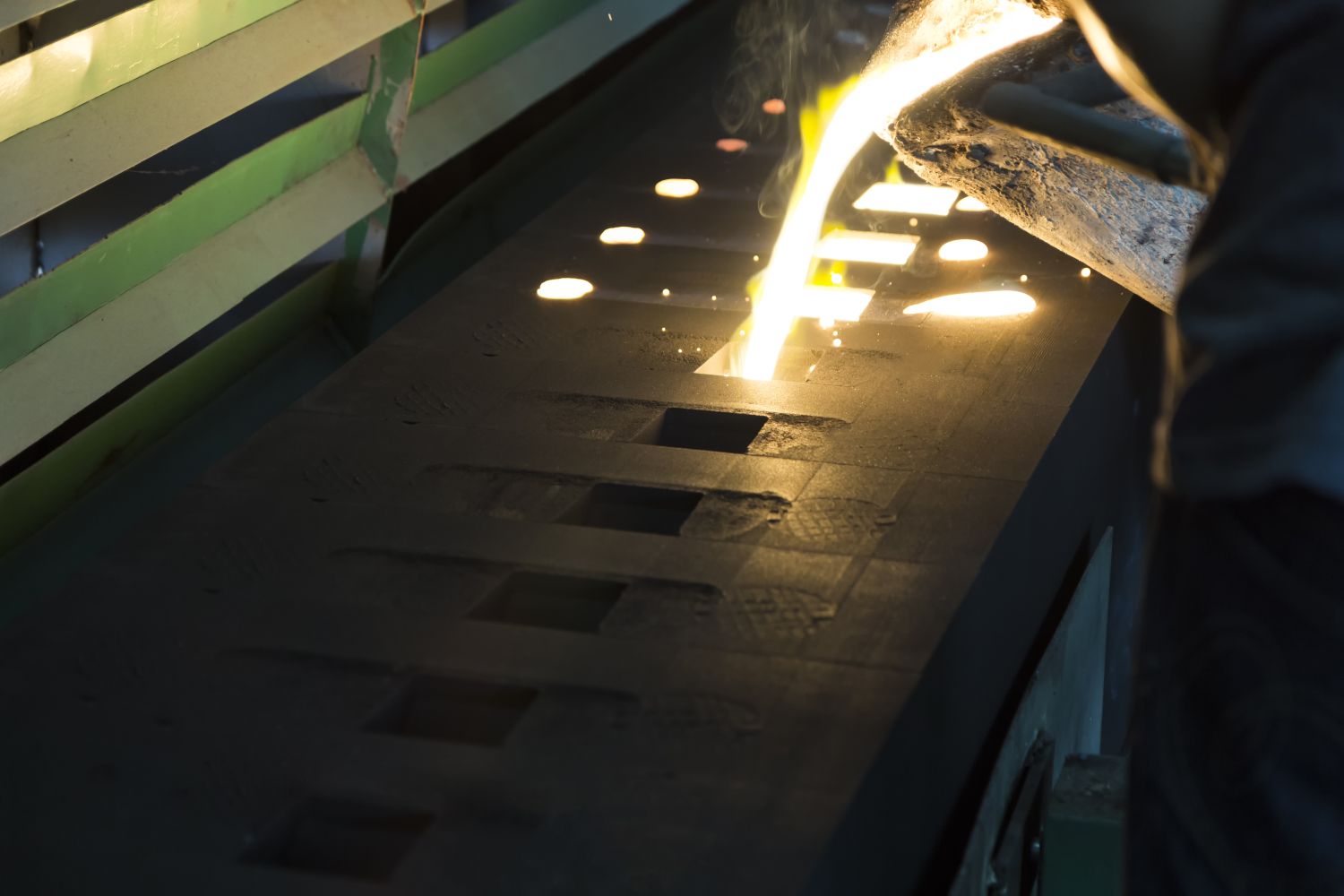
Professional Certificate of Competency in Green Smelting Technologies
- This course is designed for engineers and professionals aiming to deepen their understanding of environmentally friendly smelting technologies, with a…
This course is designed for engineers and professionals aiming to deepen their understanding of environmentally friendly smelting technologies, with a focus on hydrogen-based reduction methods. Participants will explore the principles, technologies, and applications of green smelting, emphasizing the transition from traditional carbon-intensive processes to sustainable alternatives.
-
-
-

Professional Certificate of Competency in Instrumentation, Automation and Process Control
- This professional development course is designed for engineers and technicians who need to gain practical knowledge of selection, installation, and…
This professional development course is designed for engineers and technicians who need to gain practical knowledge of selection, installation, and commissioning of industrial instrumentation and control valves.
-
-
-

Professional Certificate of Competency in Advanced Plant Maintenance and AI-Driven Predictive Technologies
- The Professional Certificate of Competency in Advanced Plant Maintenance & AI-Driven Predictive Technologies is a specialized program designed for professionals in mining,…
The Professional Certificate of Competency in Advanced Plant Maintenance & AI-Driven Predictive Technologies is a specialized program designed for professionals in mining, energy, oil & gas, and manufacturing.
-